Powered By Blogger

Sunday, June 05, 2011

Broadway's Night - June 12, 2011


There are two nights each year when I turn off my phones to everyone because I love watching the Academy Awards and the Tony Awards. Movies and live stage productions are essential for my survival. This is your reminder. Do not call me Sunday evening, June 12, 2011. The Antoinette Perry Tony Awards will be presented live on CBS. I will definitely be watching to see who will be chosen the Best of Broadway for this season.

The first time Broadway, film and TV star Neil Patrick Harris hosted the 63rd Tony Awards for the American Theatre Wing, he earned an Emmy Award for his efforts. And now, he's back to host again this year. NPH, as he is affectionately known by legions of fans across the globe, is set to return to the Tony stage as host of the 65th annual awards on June 12th.

NPH is probably best known for his role as Barney Stinson on the CBS hit series, 'How I Met Your Mother' but he has been a "Broadway Baby" from the time he was in knickers. He also hosted the 61st prime-time Emmy Awards.  But, enough about him.
The productions being honored include:
Best Play
Good People
Jerusalem
The Motherf**ker with the Hat
War Horse
Best Musical
The Book of Mormon
Catch Me If You Can
The Scottsboro Boys
Sister Act
Best Revival of a Play
Arcadia
The Importance of Being Earnest
The Merchant of Venice
The Normal Heart
Best Revival of a Musical
Anything Goes
How to Succeed in Business Without Really Trying

Some of the actors and actresses nominated for their thespian efforts this year include:
Al Pacino, The Merchant of Venice
Frances McDormand, Good People
Vanessa Redgrave, Driving Miss Daisey
John Larroquette, How to Succeed in Business Without Really Trying
Ellen Barkin, The Normal Heart
Edie Falco, The House of Blue Leaves
Judith Light, Lombardi
Elizabeth Rodriguez, The Motherf**ker With the Hat
Patti LuPone, Women on the Verge of a Nervous Breakdown

This year, the Regional Theatre Tony Award goes to the Lookingglass Theatre Company, Chicago, IL.

To view the entire list of nominees GO HERE. To visit the Tony official Web site where you can view video of scenes from the plays and Musicals, learn more about the nominees and so much more, click the title of this post.

Thursday, May 26, 2011

2011 Cannes IFF: A Big Wrap


Poster for 'Midnight in Paris' with Owen Wilson

One of the most pleasant surprises of the 64th Festival de Cannes, which ran May 11 - 22, and wrapped Sunday, was the good reception of Woody Allen's latest movie, MIDNIGHT IN PARIS, an imaginative romantic comedy where a character takes a late night walk in Paris and is transported back to the 1920s. He finds himself hobnobbing with literary giants Ernest Hemingway, Gertrude Stein, Picasso, plus Scott and Zelda Fitzgerald.

The film had its international premiere on Opening Night, screening out of competition. Some of the buzz words from critics were: "upbeat", "funny", "very enjoyable", "Allen's best in years," and the film they most often compared to it? THE PURPLE ROSE OF CAIRO (1985), starring Mia Ferrow, Jeff Daniels and Danny Aiello, in which a character walks out of a film and into the life of a vulnerable young New Jersey woman in the 1930s.

MIDNIGHT IN PARIS was filmed last year in the French capital. Allen brings together a broad international cast, including Owen Wilson, Rachel McAdams, Marion Cotillard, Kathy Bates, Adrien Brody, Carla Bruni-Sarkozy (First Lady of France), Gad Elmaleh and Léa Seydoux.

The other surprise movie at Cannes that received accolades was THE ARTIST* by French director Michel Hazanavicius. It was not made in the 1920s, but is set in that era. Shot in black and white, it is a silent movie, a study in light and shadows. (* denotes an Cannes award winner.)

THE ARTIST screened in competition. The viewers and critics absolutely loved this movie about movies. Where is it written that all movies today must be shot in color, in high def or 3D, and have dialogue, a pop music score, and a budget of astronomical proportions?  Yes, this one is special for more than one reason. It is also a French movie filmed in Hollywood, no less.

Another buzzed-about movie is Joseph Cedar's Hebrew-language black comedy FOOTNOTE* (Israel). Three years ago, Cedar's BEAUFORT was nominated for a foreign-language Oscar, and he won two Silver Bears at Berlin for directing it, and for the screenplay. But whereas that movie is rich with political overtones, FOOTNOTE does not overtly deal with things political, but with a complicated relationship between a Jewish son and his father. Sony Picture Classics snatched up the North and Latin American rights immediately. 

Also, on Opening Night, the Italian director Bernardo Bertolucci was presented an honorary Palme d'or for lifetime achievement (see previous posts), and 17 May the Festival honored French actor Jean-Paul Belmondo with a special day. In the ‘60s and ‘70s, Belmondo worked with the Crème de la Crème of cinema auteurs such as Jean-Luc Godard, Jean-Pierre Melville, François Truffaut, Claude Lelouch, Alain Resnais, Vittorio de Sica and Alberto Lattuada, in THAT MAN FROM RIO, BREATHLESS, PIERROT LE FOUR, MISSISSIPPI MERMAID, LE MAGNIFIQUE and STAVISKY AND BORSALINO, just a few movies in which he starred that showed his extraordinary acting range.

Like Bertolucci on his night, Belmondo walked the Red Carpet surrounded by friends and admirers. Later, he attended the première of Vincent Perrot and Jeff Domenech’s documentary BELMONDO, THE CAREER. The screening was followed by a dinner and party.

It would not be a film festival without a controversy, and Danish director Lars von Trier, MELANCHOLIA *, set off a storm when he spoke at a press conference about finding out when his mother was on her death bed that
he was not a Jew. His controversial statement was something like, "I have nothing against Jews, but, O.K., I'm a Nazi." 

 
Lars von Trier apologized for his remarks, but was banned from Cannes with this statement, "The board of directors firmly condemns these comments and declares Lars Von Trier a persona non grata at the Festival de Cannes, with effect immediately."

READ MORE  

Closing Night the official Jury of this 64th Festival de Cannes, presided over by Robert De Niro, revealed the prize winners during the Closing Ceremony. Actress Jane Fonda was escorted onstage at the Grand Théâtre Lumière by Mélanie Laurent. Fonda presented the Palme d'or for the best film among the 20 in Competition.

The evening closed with the screening of Christophe Honoré's BELOVED (Les Bien-aimés), starring Catherine Deneuve, Chiara Mastroianni (Deneuve's daughter with Marcello),  Ludivine Sagnier, Louis Garrel and Milos Forman. 

Poster for 'The Tree of Life' with Brad Pitt and Sean Penn
And the awards went to:

FEATURE FILMS

Jury headed by U.S. actor/director/producer Robert De Niro. Members of the Jury were: French writer/director Olivier Assayas; Argentinian producer Martina Gusman; director Mahamat-Saleh Haroun who was born in Chad; U.K. actor/producer Jude Law; producer of Chinese-language films Nansun Shi; U.S. actress Uma Thurman; Hong Kong director Johnnie To; and Norway-born writer and journalist Linn Ullmann.


Terrence Malick
   Palme d'or - THE TREE OF LIFE (USA), written and directed by Terrence Malick, starrng Brad Pitt, Sean Penn, Jessica Chastain, and Hunter McCracken. In 1979, Malick won the best director at Cannes for DAYS OF HEAVEN. More about this movie in the next post.

Grand Prix - BIR ZAMANLAR ANADOLU’DA (Once Upon A Time In Anatolia) by Nuri Bilge Ceylan, and THE KID WITH A BIKE, directed by Jean-Pierre & Luc Dardenne.

Best Director - Nicolas Winding Refn for DRIVE.

Jury Prize - POLISS by Maiwenn.

Best Performance for an Actor - Jean Dujardin in THE ARTIST, directed by Michel Hazanavicius.

Best Performance for an Actress - Kirsten Dunst in MELANCHOLIA, directed by Lars von Trier.

Award for the Best Screenplay - Joseph Cedar for FOOTNOTE.


SHORT FILMS IN COMPETTION

Palme d'or - CROSS-COUNTRY by Maryna Vroda, and Jury Prize - BADPAKJE 46 (Swimsuit 46) by Wannes Drstoop.

CAMERA d'or - LAS ACACIAS  by  Pablo GIORGELLI, presented in the framework of the the CRITICS' WEEK.

UN CERTAIN REGARD - 21 May, presented 21 films directed by 22 directors hailing from 19 different countries. Two of the works were first films. The Jury was presided over by Emir Kusturica (Director, actor and musician - Serbia). The Jury members were: Elodie Bouchez (Actress - France), Peter Bradshaw (Critic-The Guardian - U.K.), Geoffrey Gilmore (Chief Creative Officer-Tribeca Enterprises - USA), Daniela MICHEL (Director of the Morelia Festival - Mexico).

PRIZE OF UN CERTAIN REGARD Ex-æquo - ARIRANG by Kim Ki-Duk, shared with HALT AUF FREIER STRECKE (Stopped on Track) by Andreas Dresen.

SPECIAL JURY PRIZE - ELENA by Andrey Zvyagintsev.

DIRECTING PRIZE - BÉ OMID É DIDAR (Au revoir), Mohammad Rasoulof.


CINEFONDATION - Presented 20 May and Showcasing Student Films:

The Cinéfondation and Short Films Jury (Julie Gayet, Jessica Hausner, Corneliu Porumboiu, João Pedro Rodrigues and President Michel Gondry) awarded the Cinéfondation Prizes during a ceremony in Buñuel Theatre before the screening of the winning films.

Sixteen student films coming from Asia, America and Europe composed this year’s program. They have been selected out of 1,600 entries.

First Cinéfondation Prize - DER BRIEF (The Letter) by Doroteya Droumeva, dffb, Germany, awarded € 15,000; Second Cinéfondation Prize - DRARI  by Kamal Lazraq, La Fémis, France, awarded € 11,250; Third Cinéfondation Prize, YA-GAN-BI-HANG (Fly by Night) by Son Tae-gyum, Chung-Ang University, South Korea, awarded € 7,500.


Sunday, May 15, 2011

Arab Cinema Finds an Niche in Western Film Festivals

In honor of Egyptian courage and expression of freedom, the International Cannes Film Festival will host Egypt film and filmmakers at the 64th International Film Festival as the first ever guest country at the Cannes IFF, May 11 - 22, 2011.

The Festival will also honor late Egyptian directing legend Youssef Chahine and screen 18 Jours (18 DAYS), as well as a grouping of short films by several Egyptian directors filmed during the nation's January 25th revolution. Profits from the films will go toward political and public education programs in rural Egypt. O.K., I'm down with the funds for rural public education programs but a bit skeptical about the motives of political education. That is very vague.

The third Arab Film Festival Berlin, organized by Cinemaiat - Friends of the Arabic Cinematheque Association, will be held from November 2 to 10 this year. The festival's main program will present recent works by Arab filmmakers, and this year's special focus section on humor will present films of varied lengths and production dates.

Feature films, documentaries and shorts made in the last three years are eligible for Berlin, as long as they are directed or produced by an Arab filmmaker/production company, or present an issue closely connected to the Arab world. The submission deadline is June 30, 2011.

The Fourth Gulf Film Festival (GFF) at Dubai, drew to a close April 20th and ended on a high note. There was a week-long showcase of 153 films from 31 countries screened free to audiences in the United Arab Emirates (UAE) and the Arabian peninsula.

GFF 2011 drew more than 1,400 submissions from 98 countries for its fourth edition, recorded a 11 per cent growth in audience compared with its 2010 edition, highlights the growing popularity of the festival and emerging and established Gulf filmmakers among local and regional audiences.

The 2011 edition also saw one of the strongest Gulf turnouts, including the highest-ever submissions from the UAE and Qatar, and significant representation from Saudi Arabia, Kuwait, Oman, Bahrain and Iraq. In all, the 2011 line-up included 59 world premieres, 13 international premieres, 15 Middle East premieres and 15 Gulf Coast premieres.

The GFF has no graphic I can use with this post, so I used the graphic from the other film festival held in Dubai, the Dubai International Film Festival (DIFF). The DIFF is more open to Westerners than the GFF. This year's DIFF edition, along with Enjazz Film Market, will be held December 7 - 14. Please click the title of this post for more information.

One of the reasons Arab cinema has made monumental strides in quality films is the filmmakers in the Gulf region now have access to production funds for five short films annually, following a new collaboration between the Gulf Film Festival and the Dubai Film Market's Enjaaz program, that aims to support filmmakers from the Arab world.

This new Enjaaz fund offers Gulf-based filmmakers up to $50,000 per project, complementing the existing funding of up to $100,000 per project offered every year by Enjaaz to features and documentaries in the post-production phase. The first application cycle for the fund closes June 1.

Arabic film festivals also offer huge monetary prizes to film festival winners, anywhere from $25,000 to $100,000 per win. A glass or gold plated statue doesn't cut it with these guys. The statue must be in pure gold studded with diamonds, rubies and/or sapphires.

So, whoa up there you Americans, Brits, or European Union members. I suggest you do not pack your bags for these film festivals just yet. Many of these splendorous affairs are not open to you as competitors or, perhaps, as visitors. Some are by invitation only. Click the title of this post for more on these festivals.

Wednesday, May 11, 2011

Sarajevo's Regional Provillon at Cannes


This year, eight countries from the Balkan region will join together at the most important film market in the world – Marche du Film of the Cannes Film Festival.

Bosnia and Herzegovina, Bulgaria, Croatia, Cyprus, Macedonia, Montenegro, Slovenia, and Serbia have joined their forces in order to present themselves together to the rest of the film world, in the South-East European Pavilion. The initiative of the Regional Pavilion was announced two years ago at the Sarajevo Film Festival (July 22-20, 2011) in the framework of the Regional Forum, begun last year.

The initiative of linking regional cinema gradually has become stronger supported by the hopes of filmmakers that the implementation of the European idea of regionalization of film art will create more space for everyone.

The Regional Pavilion has been envisaged as a joint space for all filmmakers from the above mentioned countries attending the Cannes Film Festival to gather, meet colleagues, organize meetings, and find opportunities for their projects.

Saturday, April 30, 2011

Cannes Closing Film


Faye Dunaway Featured on 2011 Poster
French Writer / Director Christophe Honoré's film, Les Bien-aimés (The Beloved), will be screened on the Closing Night of the 64th Cannes Film Festival, Sunday May 22, 2011, following the closing night ceremony. At the ceremony before the screening, Robert De Niro and his jury will present the Festival awards.

This is not the first time at Cannes for Honoré. His first film in competition at the Festival was Les chansons d’amour (Love Songs) in 2007, for which he won Best Director. LOVE SONGS was nominated for a Palm d'Or.

This year, he returns for another walk on the red carpet of the Palais des Festivals accompanied by the French film pedigree of cinematographer Rémy Chevrin, composer Alex Beaupin, actors Catherine Deneuve, Ludivine Sagnier, Chiara Mastroiani, Milos Forman, Louis Garrel, Michel Delpech and Paul Schneider.

In case you do not known, actress Chiara Mastroiani, also in LOVE SONGS, is the daughter of the late Italian actor, Marcello Mastroianni and actress Catherine Deneuve. 

Les Bien-aimés, filmed mainly in Canada, is set in the Prague of the sixties, London of the eighties, the world of 9/11/2001, and Paris of today. It is described as a singular, melancholy and romantic work of art. Prior to production, Honoré stated his attempt with the film was to contrast the 60s, those years of love and revolution and sexual liberation, with the 90s, the era permeated with the ominous threat of AIDS and an overall fear of commitment.

THE BELOVED, a dramatic musical, is an overt homage to Jacques Demy, especially his film, The Umbrellas of Cherbourg, 1964, one of my all-time favorites. Demy, who was married to French actress Agnés Varda, was born in France in 1931, and died in Paris in 1990 of a cerebral hemorrhage.

With this movie, Honoré, one of the world’s most talented and original young filmmakers of his generation, befittingly closes this 64th Festival de Cannes. Les Bien-aimés, recently out of post production, is screening out of competition, and no release dates have been set.

The Festival opens May 11. To access Official Site in English, click the title of this post.

Friday, April 22, 2011

64th Cannes Festival Salutes Bollywood

Festival Official Selections announced. Click title of this post.


Bollywood - The Greatest Love Story Ever Told, is the title of a feature documentary  produced by Shekhar Kapoor exclusively for the Festival de Cannes. It will be screened out of competition during the 64th Festival that runs from 11 to 22 May.
 
It all began with a conversation with Shekhar Kapoor, a member of  the Cannes Jury in 2010. Why not make a film that brings together the most beautiful moments in the history of Indian musical films, with all their moving pageantry and dance? A few months later, there was Bollywood, The Greatest Love Story Ever Told.


It is a swirling and poignant montage in which Shekhar Kapoor, Rakeysh Omprakash Mehra
 and
 Jeff Zimbalist pay tribute to this cinema genre that has contributed to establishing India’s identity in the eyes of the world and to making Mumbaione of the world capitals of film history.

Love Bollywood movies or hate them, be warned that Bollywood can be addictive. One thing for sure, anyone who watches a Bollywood movie and has no reaction, good or bad, has one foot in the grave. The movies are lively and fun. A cultural icon or not, that’s Bollywood, spawned in Mumbai, India!

Bollywood - The Greatest Love Story Ever Told - (India, 2011, 81 minutes).

For the 64th Cannes official selections and other information, click the title of this post.

Saturday, April 16, 2011

Bernardo Bertolucci to Receive Honorary Palme d'Or at Cannes

Beginning this year and onward, the organizers of the Festival de Cannes will award an annual Honorary Palme d'Or, which will be presented during the Opening Ceremony of the 64th International Festival de Cannes. This recognition will be given to an important filmmaker, whose work is authoritative but who never received a Palme d'Or.

In the recent past, Woody Allen, in 2002, or Clint Eastwood in 2009, were awarded this distinction by President Gilles Jacob, on behalf of the Board of Directors of the Festival de Cannes. Now, it will become an annual tradition that will take place during the opening ceremony of the 64th Annual Festival and for festivals to come.

This year, the Italian director Bernardo Bertolucci will receive this honor, and it is fitting that Robert De Niro, Chair of the Jury, will be there when it is presented. De Niro was one of the actors in Bertolucci's Novecento (1976). The opening ceremony will be held May 11th and the festival will run through May 22nd.

Wednesday, April 13, 2011

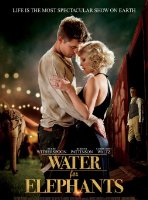
Mimi Recommends: Water for Elephants


In the 1930s, a young Veterinary Medicine student, Jacob Jankowski, (Robert Pattinson, Twlight), abandons his studies when his parents are killed. It is the time of the Great Depression when traveling circuses were popular and abundant. Therefore, penniless and distraught, Jacob hits the road and takes a job caring for animals with a third-rate traveling circus.

Jacob falls in love with Marlena Rosenbluth, the beautiful young equestrian star of the Benzini Brothers’ Most Spectacular Show on Earth. Oscar* winner, Reese Witherspoon (Walk the Line) brings Marlena to life. She is the wife of August (Christoph Waltz), the head trainer at the circus.


Christoph Waltz is the Oscar-winning Australian actor who played the monstrous Nazi in Inglourious Basterds. He accepted the role of August when actor Sean Penn dropped out.

Because it is the time of the Great Depression,  everyone at Benzini Brothers feels lucky to have a job. Marlena, a waif of the Depression, considers she is doubly lucky because she is also married. That is, until she begins to fall in love with Jacob.

It does not take long before Jacob also falls in love with her. The love triangle further complicates both their lives. Meanwhile, Jacob, who is of Polish descent, has another love, Rosie, an elephant from Poland. Because Rosie understands Polish and he can speak it, they form a special bond.


If video embed doesn't work, use this link:
http://www.youtube.com/watch?v=AuKY9kuLWvU

Water for Elephants is based on the historical novel of the same title by Canadian Author Sara Gruen, now a dual U.S. citizen. Her first novel, Riding Lessons (2004) was a hit and so was the sequel, Flying Changes (2005). Water for Elephants (2006) topped the NY Times Best-Seller list and sold four million copies. Her latest, The Ape House, was published in 2010.

The screenplay adaptation was written by Academy Award nominee Richard LaGravenese (The Fisher King, 1981). Among his other screenplay adaptations, is that of the Robert James Waller novel for the beloved novel, and oscar-winning 1995 movie, The Bridges of Madison County.  

Water for Elephants, the movie, will premiere at Grauman’s Chinese Theater in Los Angeles Thursday, April 14th. It is scheduled to open in the U.S. Friday, April 22nd.


The director was the popular Austrian music video director Francis Lawrence, who has directed videos for artists such as Britney Spears, Will Smith, Sarah McLachlan, and Aerosmith. He made his feature film directorial debut with I am Legend, starring Will Smith (2007).
 

A stellar list of credits include Cinematographer Rodrigo Prieto (Brokeback Mountain, Babel, 21 Grams); Original Music by composer James Newton Howard (also known as James Howard Newton, Sixth Sense, The Fugitive); Production Designer Jack Fisk, or Fiske (There Will Be Blood, Mulholland Drive); Editor Allen Edward Bell (The Green Mile, (500) Days of Summer, A Few Good Men).

There is a plethora of other movie professionals in the cast and crew. Among the myriad professionals there is venerated actor Hal Holbrook who portrays Old Jacob and helps narrate the story. Tai, a female Asian elephant plays Rosie, the Benzini Brother's “Great White Hope” for a successful season. Warning, she may steal your heart.

Special Effects are by Crazy Horse Effects. Other production companies are Fox 2000 Pictures, 3 Arts Entertainment and Flashpoint Entertainment. Twentieth Century Fox Film Corporation is the main distributor.

Everything about this movie portends a successful run, plus awards at the end of the year. I recommend it, hoping it will not turn out to be only a short-lived 'Tourist'. That I doubt.

        *Oscar is registered by the Academy of Motion Picture Arts and Sciences.

Saturday, April 09, 2011

Here Comes the Cannes Film Festival 2011

2011 Cannes Festival Poster
Faye Dunaway photographed by Jerry Schatzberg in 1970


Robert De Nero, Jury President

The 64th International Film Festival of Cannes will open May 11th and run through the 22nd. Cannes isn’t the oldest festival - that honor goes to Venice - but it is one of, if not the most, influential film festivals in the world.

The opening night ceremonies May 11th, presided over by Inglourious Basterds star Melanie Laurent, will feature the world premiere of Woody Allen’s latest, MIDNIGHT IN PARIS, a romantic comedy (romcom), which will simultaneously open in theatres all over France. Allen, after romanticizing New York, Barcelona and London, moves on to Paris, which is already considered the most romantic city in the Western World.

For MIDNIGHT IN PARIS, Allen has assembled a stellar international cast consisting of: Owen Wilson, Rachel McAdams, Marion Cotillard (French, portrayed Édith Piaf in La Vie en Rose), Kathy Bates, Adrien Brody (mother is 
Hungarian photographer Sylvia Plach; The Pianist), Carla Bruni-Sarkozy (Italo-French, and she is First Lady of France), Gad Elmaleh (Moroccan comedian) and Léa Seydoux (France, Inglourious Basterds). Sony Pictures has acquired the movie.

MIDNIGHT IN PARIS is officially a Spanish production, and no word yet if it will be in competition at Cannes. Usually, Allen’s films that have a festival premiere do not compete.


If embed doesn't work, click this link to watch trailer:

American actor/producer Robert De Niro will serve as President of the Jury at Cannes. As such he will preside over the main competition which awards the top prize, Palm d'Or (Golden Palm), to the Best Feature Film at the festival and other jury awards.

In issuing the invitation, the organizers stated they are also paying a tribute to the co-founder of the Tribeca Film Festival, which celebrates its 10th anniversary in 2011. Robert De Niro, well known for his love of New York, co-founded Manhattan’s Tribeca Film Center in 1989, the Tribeca Film Festival in 2002, which has a sister festival in Doha.

Doha (DOUGH-ha) is the capital of the Emirate of Qatar (KAH-tar), but Qatar is not a member of the United Arab Emirates. It is, however, a member of The Arab League, the same Arab League that recently approved the no-fly policy for Libya. Doha’s sister city in the U.S. is Houston, Texas, and Doha will host the FIFA Soccer World Cup in 2022.

Michel Gondry will preside over the Short Film and Cinefondation jury. One can hardly get more French than Gondry, who was born in Versailles, France. He won an Oscar for co-writing the screenplay for Eternal Sunshine of the Spotless Mind, which he also directed. Currently, his latest directorial effort, THE GREEN HORNET, released January 14, 2011, has grossed over $200 million world wide as this goes to press.

The Serbian filmmaker Emir Kusturica is president of the Un Certain Regard jury at the Festival. Every year, Un Certain Regard, alongside the Competition, presents around twenty films from countries the world over. The 2010 Prix Un Certain Regard Prix (Prize) was awarded to Korean director Hong Sang Soo (alternate name: Sang-Su Hong), for Ha Ha Ha.

Jean-Paul Belmondo
Jean-Paul Belmondo Pictures    French actor Jean-Paul Belmondo will be honored on Tuesday, May 17, with a special evening held in his honor. He will walk the red carpet surrounded by friends and admirers and attend the première of Vincent Perrot and Jeff Domenech’s documentary, Belmondo, The Career. The screening will be followed by a dinner and party. Belmondo, from the late 1950s, worked with many of the world’s finest directors including: Jean-Luc Godard, Jean-Pierre Melville, François Truffaut, Claude Lelouch, Alain Resnais, Vittorio De Sica and Alberto Lattuada.

To access the Festival’s official Web site in various languages, click the title of this post. Then, select the language you want. Detailed information on all the films in the Official Selection, the Juries and certain events, will be available online one week prior to the opening of the Festival.

The Official Festival Press conference for the 64th Cannes International Film Festival will be held on April 14th. The 2011 press kit containing lists of the Juries and the films selected will be available to download after that date. There will be more information on all this in next weekend’s blog post.

Friday, April 01, 2011

Revisiting THE RAINS CAME - 1939

Tyrone Power and Myrna Loy
Loy and George Brent

Maria Ouspenskya
Jane Darwall


Henry Travers


Click the title of this post to watch a video. I watched this movie, one of my favorite old movies, a couple of nights ago. It is THE RAINS CAME (1939, Black and White). I streamed it from Netflix, and it is also available on DVD.

The story is based on the novel of the same title by Louis Bromfield, published in 1937. The movie is set in India when the world is on the brink of World War II but doesn't know it. India is still a British colony, and genteel times are still in vogue. The movie is tainted with certain Hollywood stereotypes at the time of 1939, but the movie stars, all dead now, plus the cinematography and the special effects at the time it was made, make it so very special.

THE RAINS CAME, produced by Darryl F. Zanuck and directed by Clarence Brown, stars Myrna Loy, Tyrone Power, George Brent, Brenda Joyce, Nigel Bruce, Marjorie Rambeau, Jane Darwall, Henry Travers, H.B. Warner and Maria Ouspenskya. All were in the 20th Century Fox actors stable, and all were well-known stars during the Golden Age of Hollywood. The movie won an Oscar for its special effects and, again, for the time in which the movie was made, they are spectacular. The story was somewhat ahead of its time, too.

The spoiled wife, Lady Edwina Esketh (Loy), of an older British diplomat, Lord Albert Esketh (Bruce), assigned to the Province of Ranchipur, India, falls in love with a handsome, much-younger Indian doctor, Major Rama Safti (Power). Sparks fly between them. Well, they fly as much as the the Motion Picture censorship code (Hays Code), enacted in 1930, would allow.

Rama comes to love Edwina, and it is okay because by this time her husband has been killed. Meanwhile, a young woman, Fern Simon (Joyce), sets her cap for Tom Ransome (Brent), a British artist/businessman, and friend of Rama.

Turns out that Major Rama Safti has been a favorite for a long time of the Maharajah (W.H. Warner) and his Maharani, played by the wonderful Russian character actress Maria Ouspenskya. The Maharajah and the Maharani have a mission for Rama. They are concerned that Edwina could hinder that mission.

Edwina had some kind of previous affair with Tom, but it is okay, too, because they, Edwina and Tom, broke up a long time ago. They still care for each other but only as friends. Spoiler Alert: Edwina and Rama's love remains unrequited because of tragedy. How it comes about says volumes about the societal mores of the time.

Anyone hankering to see a movie the way they used to make them, when men were dapper and perfect gentlemen; women were beautiful graceful nymphs, while their demeanor demanded utmost respect; this movie is for you, especially if you are a woman.

RAINS is set in India but it was filmed in Malibu Canyon outside Los Angeles. Oh, the magic of the movies.

When I taught part time and did graduate study at the USC School of Cinema, the cinema books and the professors stated that Orson Welles, when directing CITIZEN KANE (1942), was the first director to us "deep focus" and show ceilings in the rooms. I didn't quite believe it. I was sure I had seen both somewhere before.

When I saw THE RAINS CAME for the second time, I marveled at the clarity of the deep focus, and that ceilings were shown in some of the rooms. I cannot say that director Clarence Brown was the first to use these techniques in RAINS, because both movies were in production about the same time, but I can say that Welles probably was not the first.

There were others at the time doing the same thing, but it was the way Welles used both the deep focus and ceilings that set CITIZEN KANE apart, and why today it is still on so many lists of top-ten-movies-of-all-time.

THE RAINS CAME was released in the same time frame as THE WIZARD OF OZ and GONE WITH THE WIND, both in color, a rarity at the time, but as with OZ, mostly in color. Because of that, RAINS got little press and hardly made a ripple in the history of cinema. Walt Disney's FANTASIA, also in color, was released a year later.

Someone was aware of the problem with the release of RAINS because it was remade by 20th Century Fox in color (1955) as THE RAINS OF RANCHIPUR, with Lana Turner, Richard Burton, Fred MacMurray, Joan Caulfield, Michael Rennie and Eugenie Leontovich. This version had a big budget and was filmed in Lahore, Pakistan.

All of the original movie is pretty much there, especially the earthquake and the flood. It, too, was nominated for a special effects Oscar, but did not win. Color did not help in that department. I still like the original better, even with its stereotypes and hokeyness, which now makes the original more fun to watch.

By the way, I did meet Orson Welles at the original Universal Studios production complex, not one of their fantasy playgrounds. I had barely arrived at USC and one of my new fellow students took me there to one of those screenings that are followed by Q and A with someone involved in the production. Then, afterward, one shakes hands with the celebrity of the evening and moves right along to the exit.

I was so in awe to be in the same room as Orson Welles, that I did not remember the movie they screened, or who else was there. I still don't. It was like meeting Frank Sinatra in Las Vegas. I simply got lost in their eyes.

Later, when I was teaching a German film summer seminar in Germany, I learned that director Leni Riefenstahl said the same thing about her first meeting with Adolf Hitler. Oh, my.

Next up: Here Comes Cannes!

Tuesday, March 22, 2011

Readers say Academy Awards need some changes.

Best of 2008
Actor - Daniel day-Lewis, Supporting Actress - Tila Swinton, Actress - Marilon Cottilard, and Supporting Actor - Javier Bardem.

If you are having a problem placing a comment on this blog, please go to my profile and send an e-mail. Blogger has instituted a new spam checking program. I cannot find out why people are having trouble commenting on my blog posts. Your help will be appreciated. Contact me through the e-mail address in my profile. Thank you.

I received some comments by e-mail concerning the previous two posts about the recent Academy Awards television broadcast. Perhaps, I didn't make myself as clear as I had wished, or the readers didn't find the points clear enough for them. So I shall try to explain a little better for those of you who wrote.

First of all, my point was really that the Academy of Motion Pictures Arts and Sciences seeks to honor its own, and that is exactly what it did for almost three decades. Then, television came along and things began to change. Now, television, a.k.a., the ABC Network at the moment, has a huge say about the Academy Awards. They want ratings because they do it for money. Rightfully so, as they are a business, and they just extended their contract with the Academy for seven years. So, they are happy.

Around the world movie fans, and those who work in the industry in foreign countries want to see the Oscars. Once the Academy starts live streaming on the Internet, the entire world will be happy, except maybe ABC.

The Academy wants everyone to be happy. The Academy today is a super big business. It is no longer that dinner at a Hollywood hotel, and awards being given out among a few invited guests. They started to allow the radio broadcast fairly early on, and the importance of the Oscars started to grow.

Next, along came television, and the Academy awards began changing radically. Now, there is the Internet and the Academy foot soldiers are fiercely trying to catch up, yet they want to hang on to televisions' coattails at the same time.

Today, the money the broadcast, and the satellite businesses that generate money for that broadcast, propel the Academy Awards. The Guilds mostly influence the actual nominations and cast the most votes within the Academy. The Guilds honor their own. The Academy is only the conduit, which has turned the Academy Award broadcast into a big, brash, glittery financially rewarding circus.

As a former part-time member of the USC faculty of Cinema, and a sometime writer and producer, I know very well what craft people do and their importance to the industry. I was not slighting them, only suggesting some logistical changes.

And, yes, I know that star power is fading, but actors are still very relevant to movies and are paid well for what they do. I still think most people see a movie, either at a theater, on DVD, Internet streaming, etc., based on three things: who is in it, who directed it, and what is it about?

Also, I constantly promote independent films here. I picked 'Hurt Locker' as an Academy Award winner and Kathryn Bigelow to win best director as soon as the movie was released. I know first hand the discrimination women have experienced in both the movie and television industries for so many years, and Bigelow's win made history.

I promoted 'Slumdog Millionair' and 'The Kite Runner,' when few had heard of them, and the same for this year's 'Winter's Bone'. I also championed 'Hustle and Flow' and the song from that movie for best song, "It's Hard Out Here for a Pimp," and the song won. Of course, I am a little partial as I have long-standing ties with Memphis. Over the years, there have been many others I have picked to showcase here.

The big films do not need any help. They soar or crash on their own merit, but the small films suffer for lack of financial support, good publicity and distribution.

When I wanted to study the technical aspects of television in undergraduate school, a professor said, "Oh, don't bother. They will never let a woman touch the equipment in a TV studio."

A few years later, I got the FCC license required at the time, and became a broadcast engineer. In that position, I worked at the transmitter site for a small station in Corpus Christi, TX, until it went remote. Then, I ran the entire studio single handily on Sunday mornings. So, I learned, and I touched the equipment. That laid the ground work for my association with the movie industry and as a teacher of cinema.

So, what I was basically trying to say in the previous posts is, if the Academy is going to do a TV show, then do a TV show. If they want to honor their own and have a major television show, they need to stop, re-evaluate their mission statements and adopt some newer approaches.

I really think the biggest problem is that The Academy-Award industry, and it is a huge industry, has grown so large it is impossible to successfully reach their mission statement for both offering an evening of spectacular entertainment (show), and generating revue (business), while honoring their own in a dignified way all at the same time.

It is not pleasing or dignified for everything during the show to be executed in a rush, rush, manner, clip, clip, hurry, hurry. It stresses the people involved, and it stresses the viewers to watch their favorites being forced off mike by music with ever increasing in volume. It is not dignified. They may as well get a stick with a hook on the end.

This year's broadcast was full of hurry, hurry, and awkward moments. The pace of the broadcast should be varied and the show progresses, ebbing and flowing, not jerking, racing at one moment and dragging the next.

There may be a way to increase ratings, revenue, and offer the viewers a more relaxed, pleasant and entertaining broadcast. Well, not only one broadcast. Perhaps, the Academy should consider three or four. Why not? The Emmy Awards have already done that, and successfully. I can't see why ABC would not like that approach. Again, think logistics, which is the hot current business buzzword.

Also, I agree that to watch the broadcast on Sunday is really an imposition on those working during the week. I once attended when I was working, and I feel your pain. What is wrong with a Saturday night?

Thank you all for your comments and I welcome more.

Sunday, March 13, 2011

EW Writes About Fixing the Oscars


It seems that one analysis of the 83rd Academy Awards will not suffice. I came to this conclusion after I read the article in the March 11th issue of Entertainment Weekly (EW). [#1145, March 11, 2011, “How to Fix the Oscars,” page 44]

Number one on their list was also my main suggestion in my previous post, which was to go back to five best picture nominees. Yes! See, Chewing the Oscars: Getting Down and Dirty.

Next, EW dealt with the hosts, and we are pretty much on the same wave length here. Franco and Hathaway were too young and inexperienced, and the material they were given was not up to the usual standard for hosts. It all showed, big time.

EW suggested that Tina Fey and Will Farrell host the show. Emphatically, I DO NOT agree. The Oscar broadcast should not be a circus joke fest, although the broadcast is listing in that direction.

I mentioned Billy Crystal as an example of a contemporary host of exemplary quality. They mention two others, which I should have but neglected to mention, Hugh Jackman and Steve Martin. All of them did an excellent job helming the Oscars.

In the suggestion “Stop Chasing Your Youth,” EW points out that people do not watch the Oscars to constantly be reminded as to how “hip” the Academy is with technology.  I took it much further in my post than they.

I think most viewers tune in to watch the Oscars because their favorite movie star and/or one of the movies they saw during the year is nominated for something. They enjoy the “horse race” and want to be a part of it. Heck, they probably have 25 bucks, or more, in the office pool riding on their choices to win. They want to root for their choices, and gloat when they have picked a winner.

I was giving "Oscar Parties" in Los Angeles long before the Academy ever designated their Oscar Night Parties. Someone passed it on to them, and I am happy they did. We can all still enjoy our private parties with our friends and families.

EW suggests something to wake up the audience in mid-show. I agree. As I pointed out, after 20-something acceptance speeches all of which could be given for any winner simply by changing the names, we need something stimulating.

They suggest something like Woody Allen’s salute to NYC after 9/11. I suggested in my previous post, and still do, a mini salute to the individual given the year’s Lifetime Achievement Oscar at the un-televised Governor’s Ball. I’m still smarting because that has been completely removed from the Oscar Broadcast.

I suggest, no statue, no speeches. The receiver is introduced by some hot star of today, reminding the audience how great this individual once was, and the honoree takes a spotlight bow to hearty applause.

I do agree, and I missed writing about this in the previous post, that all short films should be removed and honored elsewhere. I go to commercial movie theaters fairly regularly and in different places. It has been decades since I have seen a movie short of any kind run at a theater. Perhaps in city art houses they still have one evening when they show the nominated short films, but not in Peoria.

For those not in the know, many years ago when a movie project was pitched to producers or a studio head, they would ask, “But, will it play in Peoria?” 

Someone, I have forgotten who, determined that Peoria, Illinois, was the perfect example of middle-class America. I doubt short films are shown in Peoria. Perhaps they should be included in the evening when the student film awards are presented.

EW suggests some other things, too, such as moving the broadcast back to January, but then they admit that the logistics, in relation to the awards season in general, would be a nightmare. That it would. Why did they suggest it in the first place?

EW thinks there should be a rule that costars do not present. I agree. I would add, unless the costar won the Academy Award the year before in the category he/she is presenting.

They urge the Academy pay attention to the Grammy’s which gives only 10 awards. I agree. There are too many awards that are not relevant to today's viewers.

In days gone by during the Golden Age of Hollywood (1920’s to mid-1950s) the Academy gave the awards at and for the pleasure of the Academy members, which were broadcast by radio. With the advent of national television. they began to give the awards to pleasure the entire nation. Now, in this century, they are taking on the world, and that is a huge responsibility. Are they living up to the task?

Personally, I do not think so. If the awards are going to be for the world to enjoy, there is big room for improvement, and it would not necessarily involve whiz bang technology. However, that is another post for another year.

EW did not mention the revolving producers in the last five years, as I did, but this is the last I shall write about this year’s Oscars. Promise! The first words for next year’s Oscars? Think:
Kevin Spacey.

Saturday, March 05, 2011

Chewing the Oscars: Getting Down and Dirty


When I was a little girl there was a tradition in our small farming community. The minister/ preacher/ brother, the title varied, was invited to a parishioner’s home for dinner every Sunday after church along with his wife and children. We will use Preacher Man here, because the preacher was always a man, and he at least attempted to preach. The Preacher Man’s invitations were rotated among the members.

My grandmother was known for her chicken and dumplings, or fried chicken, fruit cobblers and chocolate banana pudding, but mostly her biscuits. That meant she cooked dinner, served shortly after noon, for the Preacher Man about every six months. When the Preacher Man was coming to Sunday dinner, we were assured of an interesting afternoon whether any children tagged along, or not, and it grew more interesting as I got older.

After the dessert, Preacher Man would loosen his belt and say something like, “Well, I guess it is time for us grownups to chew the sermon.” That was the children’s cure to skedaddle.

I never went into the hallway or out into the yard to play with the others. I hid behind the kitchen door and listened. Preacher Man would ask, “What did you think?” Sometimes, the conversation became heated but it never came to blows. After all, everyone at the table pretty much had the same religious beliefs.

Why am I writing this here? Because, after viewing the 83rd Academy Awards, I really feel like "chewing" the recent awards. For the winners, please read the previous post.

First of all, the hosts for the evening, Anne Hathaway and James Franco, have been taking a lot of flack from the critics for a boring show. In my post, December 4, 2010, “Not Thrilled with the Oscar Host Picks,” I wrote much less strongly than I felt about the choice of the inexperienced Hathaway and Franco. I decided to walk lightly, but I definitely had my doubts that either alone, or both together, could carry the show.

Franco and Hathaway were chosen and hired by the producers, Bruce Cohen and Don Mischer, and as Craig Ferguson said so emphatically on his show the following night, “The blame for their performances rests squarely on the people who hired them.” I want to add that some of that blame should also go to the writers for the lines and “stage business” they wrote for them say and do.

A little over half way into the show, there was video of the late, great Bob Hope, the best television host the Oscars ever had. It was meant to be a tribute, but I immediately thought, “Oh, gee, I wish we had Bob Hope tonight instead of . . .” The producers chose Billy Chrystal to give the tribute, pouring salt into the wound. I think Chrystal follows behind Hope and Johnny Carson in the pantheon of great Oscar hosts of all time. What were they thinking?

Then, there was the elementary school chorus at the end of the show. Why? Sure, they are cute and very talented, as is their director, but the pint-size YouTube sensations have a long way to go to earn the Oscar spotlight. It was a vaudeville moment and did nothing to enhance to show.

The most abhorrent thing to me about the recent Oscar broadcasts is the deterioration of the acceptance speeches. In this recent broadcast there were 30-something speeches and they were almost all exactly the same. Except for a couple, only the names of the thanked were changed. Early on, I was yearning to hear a speech from the likes of Charlton Heston, Elizabeth Taylor, David Niven, Bette Davis, Ben Kingsley, Maureen O’Hara, or Laurence Olivier. I did not.

It seems to be in vogue now that every person is obligated to thank their spouse or significant other. Plus, there is their agent, the director and cast of the movie, their co-nominees, their parents living or dead, their children, and sometimes, their favorite elementary school teacher. Heck, they may even praise their dog. Enough is enough. Really!

I think the best speech of the evening was that of the writer for the original screenplay, The King's Speech, David Seidler. He opened with, "I have been told that I am a late bloomer." The story behind Mr. Seidler's writing of the screenplay is almost as interesting as the movie. That story was not told during the Oscars, but it is worth a Google. 

There are two other problems that must be mentioned. The Academy opened the Best Feature Motion Picture up to 10 films in order to give more movies a chance and, hopefully, increase viewership in the process, but I do not see it working well at all.

One director friend quipped to me, “It is so much better to be ranked one in the five best films of the year than one in ten.”

I agree. I think they should go back to five. Ten are more expensive to showcase than five, and they are not gaining anymore viewers with those additional nominations, so adding five more films has not been cost effective. Also, more than five films muddles the nomination process since the supporting categories only allow for five each (director, etc.)

Neither has it been productive to change the voting process from what it was a decade ago. Two cases in point, the Best Foreign Language Feature Film and the Best Feature Documentary.

Starting with the foreign language film, the movie from Mexico, Biutiful, in Spanish, and starring the box office draw Javier Bardem, who also received a best actor nomination for his role in the movie. Biutiful was directed by Mexican director Alejandro González Iñárritu (Babel, Amores Perrors). In the final vote, it was passed over for the movie In a Better World (Hævnen) from Demark.

In a Better World is in Danish, Swedish, and some English. It is directed by Susanne Bier, and rated R for language as well as violent and disturbing content, some involving preteens. I do not like the choice.

Bier has directed one American movie, After the Fire, and her Danish movie Efter brylluppet (After the Wedding, 2006) was nominated in the Best Foreign Language Film Category for that year, but lost to The Lives of Others, a German film directed by Florian Henckel von Donnersmarck. I saw both movies and After the Wedding did not hold a candle to The Lives of Others. There, the Academy members made the best choice.

I have no idea how the Greek movie Dogtooth received a nomination in this category this year. It is the most vile and disgusting movie I have ever seen.

For one thing, I do not see Americans rushing to see In a Better World, or buying the DVD, so they can frantically read subtitles. I admit the Castilian Spanish and Catalan are not familiar to most Americans, but about 40 per cent of Americans can speak or understand the Spanish spoken in Mexico, the USA, and in the movie, Biutiful.

What is the reasoning for these seemingly irrational choices? For the Best Foreign Language Film Category, the actual selection up until the final vote is done by committees appointed by the Academy. One committee starts with X amount of films submitted to the Academy by countries around the world, and finally, it picks nine.

Then, it gets complicated, but somehow members in New York and Los Angeles vote for their choice, then, another committee picks five from which the nominations come. All Academy members may vote for this category on the final ballot, but only after being certified as having seen all five nominated films, or something like that.

The way I understand it, Academy members are not allowed to vote for the best feature documentary, even if they have seen all the documentary films. Only a small number of individuals form a committee, selected from Academy members who have been involved with documentary film making.

This select group starts with a list of 15 documentaries to consider, and finally narrows the field to five. Then, this committee votes for the winner. So, it is their own kind voting for their own kind, and I think it is wrong. If I am wrong, please enlighten me.

The final choice of the committee was Inside Job, directed by Charles H. Ferguson and produced by Audrey Marrs. Inside Job takes an extensive look at the financial meltdown, starting with Wall Street in 2008, and the causes. Three years ago, Ferguson was nominated for No End in Sight, about the American occupation of Iraq.

This year, he addressed the audience with the statement, "Not a single financial executive has gone to jail and that is wrong." He received a substantial round of applause with the statuette.

What about the documentary feature directed by Davis Guggenheim, Waiting for Superman? It was released to good reviews. It did not make the final list for a nomination.

One major problem with the Academy Awards broadcast is that for almost five years, the Academy has been giving tryouts to various producers and hosts. Few, if any, have passed the test. Each year the producers have gone overboard trying to come up with irrelevant stage business and everything else other than aiming for a sophisticated, interesting, cultural experience.

The Academy dream machine has developed a hiccup by trying to be all things to everyman and every woman. Plus, this year they desperately tried to prove how hip they were with social media, and the set was much too "busy," and distracting. In addition, perhaps someone will have the sense to at least introduce the recipient at the Governor's Ball of the Honorary Oscar for Lifetime Achievement in Film. That would be a very kind thing, and I miss it.

Therefore, I would like to nominate a producer for next year whom I think has the talent and know how to right the ship of Oscar before it takes on too much pompous bombast and sinks. I think he can not only right the ship, he has the skills to produce a sophisticated first-class show.

That person is Kevin Spacey. He has proven himself at the Old Globe in England, as well as his guiding hand at the Sarajevo Film Festival, and in many other endeavors. I urge the Academy of Motion Pictures and Sciences’ Board of Governors to ask him to produce next year’s awards show. I encourage them to make the offer immediately. He is a busy man.